Generative Design as a Branding Method
Patrik Hübner is a creative director and creative technologist in Germany. Twenty years at the seam of design and code; he moved into generative design in 2014 and built it into a branding practice used by Landor, Interbrand, Wieden+Kennedy, FutureBrand, The New York Times, Evian, and Lexus. Thirty-plus awards since 2018, among them ADC, D&AD, the European Design Award, and the German Design Award. He is the clearest working example I know of a brand system that is a program, not a set of artifacts.
His entire practice reduces to one mechanic. Live sound in the hall becomes a logo that reshapes by genre (Philharmonie Luxembourg, with NB Studio). Wind, waves, and weather become a brand crafted by the elements (BRUTE, with Landor & Fitch). Tens of thousands of match data points become every move of a championship run drawn onto a car (Lexus × 100 Thieves). A selfie of your real mood becomes your face rebuilt as shapes in a three-dimensional field, broadcast to a network of screens (Surface). Community activity becomes a brand built to evolve as the community does (Polkadot).
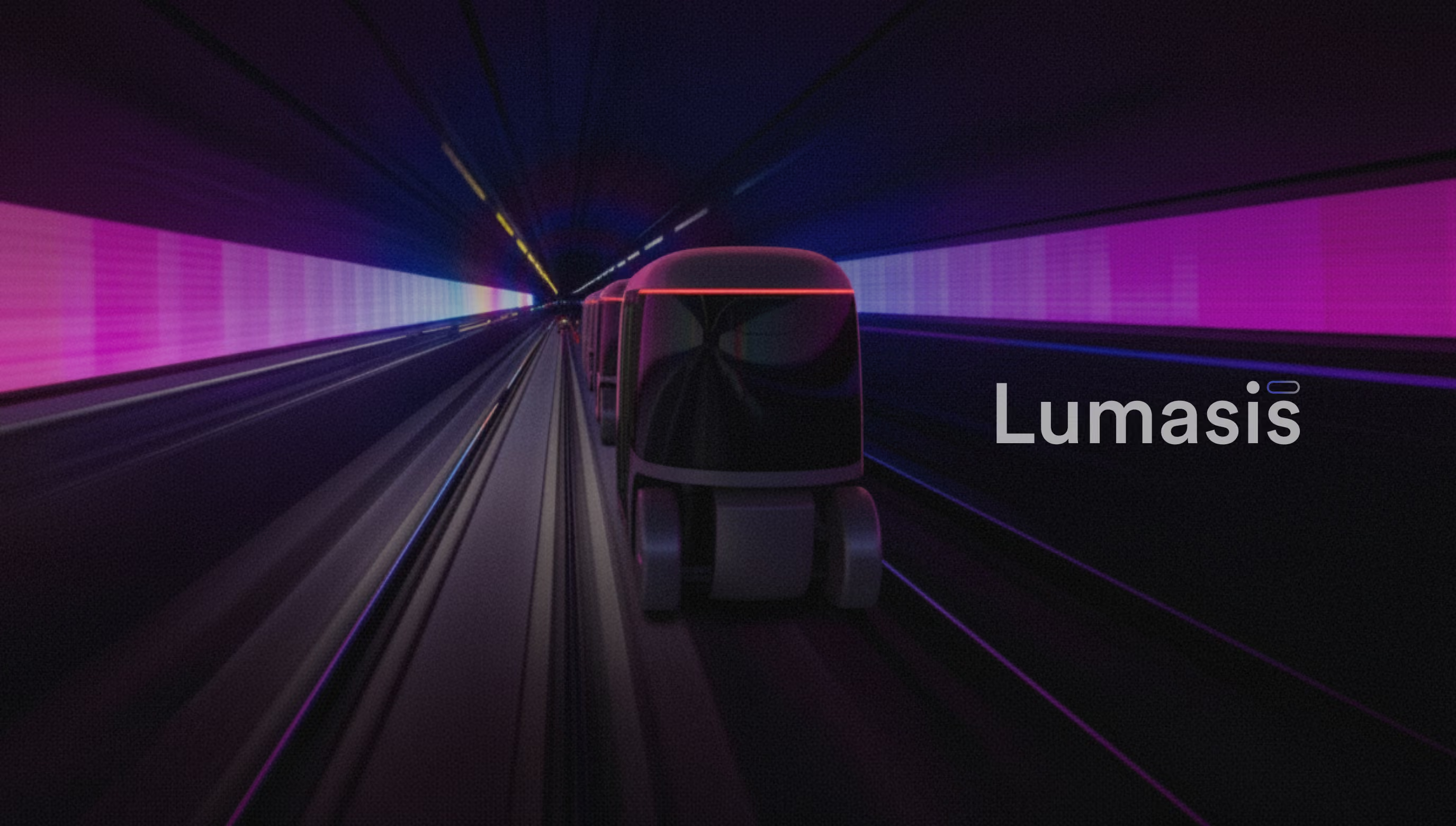
The discipline is not in the algorithm. It is in choosing an input that means something to the brand, then constraining the output hard enough that a thousand variations still read as one identity. That is the same problem as a design system holding across kiosk, app, and vehicle — the one Lumasis had to solve with fixed tokens instead of live data.
Every one of his projects ships a tool, not just a look: the Munken Creator typeface playground, the Elsevier data system with a web GUI to steer it, the Surface photo app. A case study that ends in a controllable instrument reads as engineering, not decoration.
“He was a bold man who first ate an oyster,” Jonathan Swift wrote. The first person to eat one had no proof it was food. His 2014 move into generative branding was the same bet — a method with no client demand yet, adopted because it was obviously the future and nobody else in branding was doing it. The reward for eating the oyster first is that everyone who follows is following you.
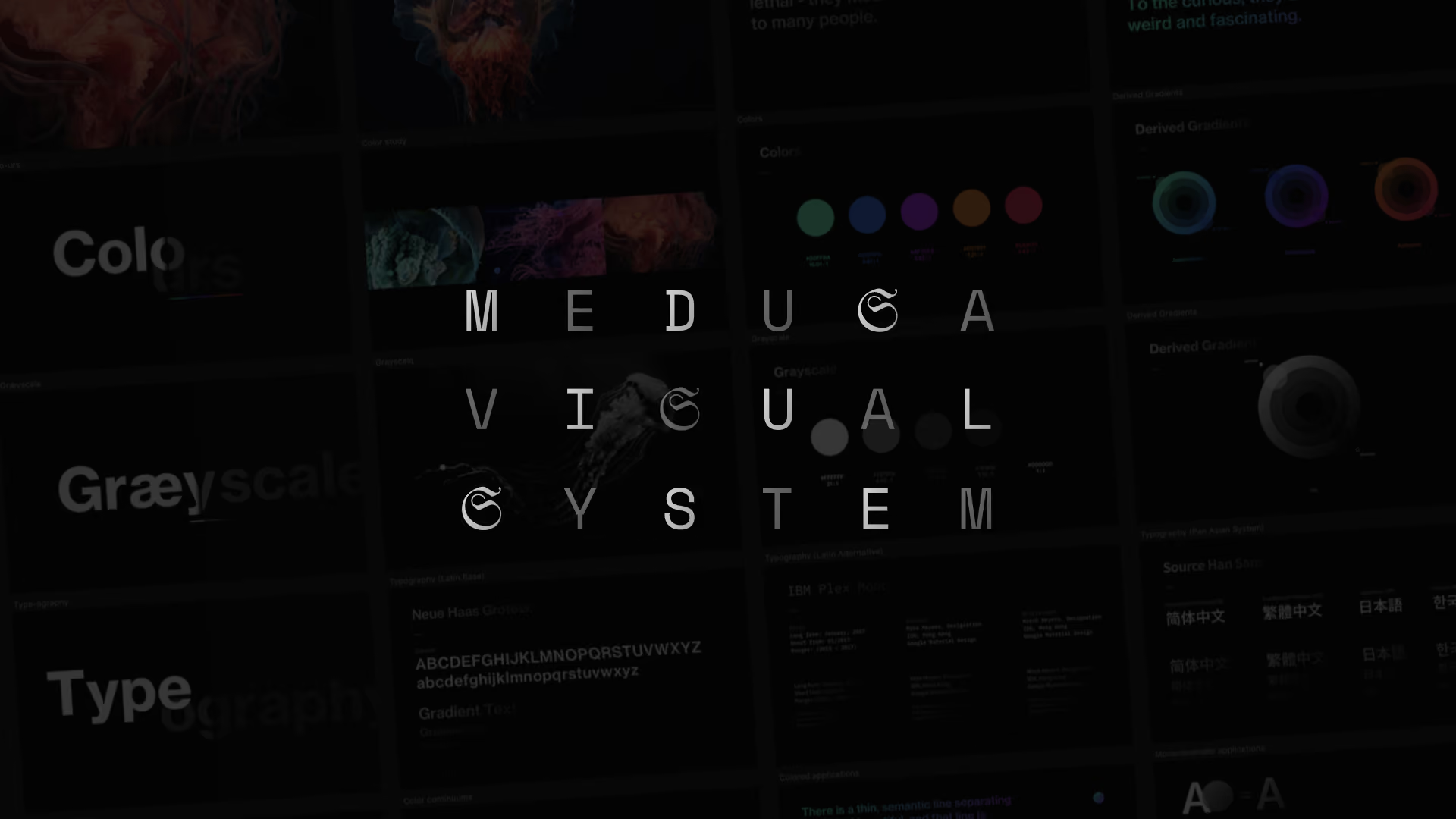
Two threads to pull from here. Data Stories is already Input → Output — network telemetry in, a WebGL brand out — and the mechanic is the story. And the Medusa Visual System’s gradient continuums are a latent generative system: five hues and a parameter space waiting for an input. His full archive is at patrik-huebner.com.

TERMS OF USE
AMIT PATEL DESIGN𝔖®, CURIOU𝔖 𝔖PACE®, and MEDU𝔖A™ word marks and design marks, along with other names, logos, graphics, and materials displayed on the Site that function as trademarks (collectively, the "Marks"), are owned by or licensed to AMIT PATEL DESIGN𝔖® INℭ. These Marks are protected by copyright, trademark rights, and other intellectual property rights under United 𝔖tates and international law. Unauthorized use, reproduction, or distribution of these Marks is strictly prohibited.
Content on this site may not be used, reproduced, or otherwise exploited for purposes of training or developing artificial intelligence or machine learning technologies, nor for data mining, scraping, or crawling.